Showing posts with label Bad Metaphors. Show all posts

Friday, October 10, 2008

CNN: The worldwide leader in jargon

I am stepping out of character here at the beginning to talk about why articles like the one I deconstruct below are so gosh darn pernicious. It's not just that the article is poorly written. It's not just that it contains a bewildering combination of unsubstantiated statements, oversimplifications, paragraphs packed with jargon that most people won't know, and weird metaphors about salad. It's that articles like this, which doesn't do a good job of explaining anything, leave people with the feeling that this stuff can't be explained. They throw up their hands, panic, or just find someone who seems smart and well informed and follow what he says. This financial crisis is far from simple, but it's not inexplicable. A well-written guide to what's going on is possible, and National Public Radio has done a good job of covering the happenings (in audio format.) But instead of spending the time and money to sit down and hammer out the details CNN, and a lot of other media sources, seem to prefer putting up slapdash articles and video pieces describing a small bit of what's going on, with facts and causality often missing or wrong. It's an approach that fosters panic and confusion. It's irresponsible and lazy. This article is an example of that approach.


David Smick has a beard. He also runs a financial market advisory firm in D.C. Sometimes he writes for CNN. This is his latest column.

-- At this point in the credit crisis, at least one thing is certain: most policymakers lack a clue of what is really at stake.

Bold statement. So what really is at stake?

Those with some knowledge are driving policy looking through the rearview mirror.

It's a nitpick, but do you really look THROUGH a rearview mirror? Don't you look into one? They're not transparent.

Begin with the U.S. Treasury's $700 billion bailout package. This was presented as some magic pill which, if gulped down, would quickly restore financial stability.

Far be it from me to defend the bailout, which is problematic, but I don't remember the term "Magic pill" being bandied about. More like "Extreme but necessary measure so that we don't have complete economic collapse." It was more of a "Take this or you DIE!" situation than "Take one of these and you'll be fine by morning."

The "shock and awe" of the sheer size of the taxpayer-funded bailout would somehow restore confidence.

Shock and awe is in quotation marks here. Nobody ever used that term. Also, once again, a lot of people were talking about how the $700 billion was a relatively small amount given the size of the crisis. I don't recall anyone arguing that this was a giant wave of money that would sweep the crisis away. It was more that the crisis was so huge that to even put a dent in it you needed this unfathomable sum.

The reason I bring this up is that David Smick is clearly building a strawman argument, which he will proceed to tear apart, and he isn't even being subtle about it.

Instead, stock markets collapsed and credit markets remained frozen.


For one week. A week which precedes any of the bailout money actually being spent. It's a bit soon to be calling failure on the thing BEFORE ANY ASSETS HAVE BEEN PURCHASED.

This is because the credit crisis reflects something more fundamental than a serious problem of mortgage defaults. Global investors, now on the sidelines, have declared a buyers' strike against the sophisticated paper assets of securitization that financial institutions use to measure and offload risk.

This is accurate, but is the average CNN reader really going to understand what it means? There has to be a level of sophistication between Tickle Me Elmo metaphors and "Global boycott on sophisticated paper assets of securitization."

In recent years, our banks, borrowing to maximize the leverage of their assets at unheard-of levels, produced mountains of financial paper instruments (called asset-backed securities) with little means of measuring their value. Incredibly, these paper instruments were insured by more dubious paper instruments.

Also accurate (if incredibly non-specific). Also requires enough familiarity with what's been happening and what's going on that if you know what all of this means YOU DON'T NEED THIS COLUMN.


Therefore, the housing crisis was a mere trigger for a collapse of trust in paper, followed by a de-leveraging of the entire global financial system.

"Therefore" implies that you have constructed a logical argument we can follow. You have not. You just have a beard. What you said previously does not necessarily lead to this conclusion without a boatload of outside information. You skipped a few dozen steps.

As a result, we are experiencing the painful downward reappraisal of the value of virtually every asset in the world.


Except for sweet ass beards. That's an asset whose value is never reappraised downwards in the face of a massive worldwide de-leveraging. Am I right? Also, you haven't really explained why the de-leveraging leads to downward reappraisal (Short answer: Less money around means everything is worth less, numerically. Essentially deflation. Longer answer: This might be a part of what's going on, but not even close to the whole story. Some assets are, in fact, increasing in value. There's a lot of other stuff at play.)


So what are these paper instruments, these asset-backed or mortgage-backed securities?

Ooh, ooh, tell me!

I like to use a salad analogy.


My bad metaphor sense is tingling, but give it a shot.

Before the last decade, bankers simply lent in the form of syndicated loans.

Salady!

But with the huge expansion of the global economy in the 1990s, which produced an ocean of new capital, the bankers came up with an idea called securitization.

I like a lemon-vinaigrette dressing.

Instead of making simple loans and holding them until maturity, a bank collected all its loans together, then diced and sliced them up into a big, beautiful tossed salad.

That sounds...a little papery. Smooth transition into the metaphor there.

The idea was to sell (for huge fees) individual servings of diversified financial salad around the world.

Invest Fresh!

The only problem: under an occasional piece of lettuce was a speck of toxic waste in the form of a defaulting subprime mortgage.

Call the FDA! Is it just me or is this metaphor adding absolutely nothing but confusion to this half-assed attempt to explain what happened?

Eat that piece of salad, and you're dead.

Piece of salad? You mean the lettuce? Or the serving? Or the toxic waste? Can we wash it off? Piece of salad? What?

The overall salad looked delicious, but suddenly global investors were no longer ordering salad.

They'll get FAT!

No one knew the location of the toxic waste.

IT'S UNDER THE LETTUCE!

This distrust heightened when global interest rates began to rise.


What distrust? You have yet to use that word, or use any combination of words that would describe that concept.

So what does this salad boycott mean for the future

Fat investors. We've been over this. I like how Smick keeps dropping into and out of the metaphor seemingly at random.

and why have financial markets collapsed so brutally?

Yes. Why?

The markets are telling us the world will face a serious credit crunch in 2009 regardless of how much money government spends to remove the toxic salad from bank balance sheets.

That's a prediction for the future, not an explanation of the collapse. And why can't you just say toxic securities? The salad gambit failed. It failed like a Tickle Me Elmo salesman who overstocked his store based on previous...never mind.


Policymakers have no means of forcing the banks to start lending short of nationalizing the entire financial system. After all, the U.S. banks alone so far during the crisis have lost upwards of $2 trillion from their collective asset base.


"After all" once again implies that the second sentence explains the first, BUT IT DOESN'T. It might provide reason why banks are leery to lend at present, but in what way does it keep policy makers from forcing banks to start lending? Doesn't. They're related situations, but not identical.

Most banks are leveraged by more than 10 to 1. Translation:

Great! You're going to explain what leveraging is!

The U.S. financial system will have a whopping $15 trillion to $20 trillion less credit available next year than was around a year and a half before. The cost of money is rising and the availability shrinking.

You rat bastard! Way to sneak the phrase "Cost of money" in there too. I think you mean the cost of credit (That's what this generally means), but who knows. Maybe you think a dollar now costs $1.25. You are writing for CNN. Anything is possible.
.

True, the banks will still lend -- but the fear is they will do it only to people such as Warren Buffett, who don't need loans. What is uncertain is the amount of lending to borrowers engaged in entrepreneurial risk, the center of business reinvention and job creation.


Way to bring this up NOW. Remember when we were talking about asset evaluation? This is a huge part of it. Dried up credit markets are a huge threat to the short and longterm financial health of a lot of important companies. This is, in part, why the stock market is tanking (Along with good old fashioned panic, partially brought about because nobody knows what's happening, because the media has completely dropped the ball) and why companies are shedding jobs. Even big seemingly solid companies rely on short term loans to smooth out their operations, and without access to these credit markets many face severe liquidity crunches, which could potentially lead to service disruptions etc..etc... All of which will make people even more reluctant to lend, and we're in the midst of a vicious cycle that could do serious damage to parts of the economy that weren't even involved in these shenanigans.

Apart from the economic pain resulting from shrinking credit markets, we are about to see an earthquake in the relationship between government and financial markets.

About to see? WATCH OUT NEW ORLEANS! HURRICANE KATRINA IS GONNA BE A DOOZY! We are in the PROCESS of seeing, and in many cases HAVE ALREADY SEEN.

The great uncertainty is whether government has the power to rescue the financial system in times of crisis. It seems doubtful.

This is what is known as the power of positive thinking. If you're going to scare people you should probably at least do them the favor of explaining what it is you think they should be afraid of.

In the United Kingdom, for example, the collected assets of the major banks are four times the nation's gross domestic product (GDP). A similar situation exists in many Euro zone countries. This means government cannot bail out the system even if it wanted to. Given such massive exposure, government guarantees in a time of crisis become meaningless.


Thanks. Although it's probably WORTH NOTING that not all of those assets are toxic or problematic, and so government might very well have enough money to deal with THOSE assets. The government also, to borrow a phrase, still has a thing called a printing press. Fiat money has many problems, but one of its advantages is that it allow the government to spend as much as it wants. It can be very problematic but it's still meaningful.

Yet because of the interconnected web of global financial relationships, we are all vulnerable to the threat. The collapse of, say, a major European bank would hardly leave American workers immune.


Why is that "Yet" there? That is the most useless "Yet" in the history of mankind. Also, I don't think there are a lot of Americans going "Europe's in trouble, but we seem to be doing just fine over here." Phrases like "Economic death spiral" and "Greatest depression" are being bandied about.


Our policy leaders in Washington are thinking domestically when the solution to the credit crisis will be global. It is not that the world lacks money; it is that the world's money is sitting on the sidelines -- more than $6 trillion in idle global money markets alone.

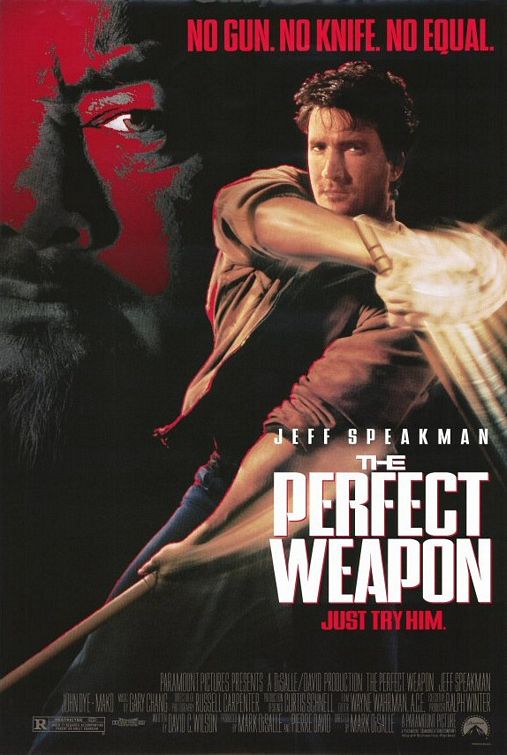
That's nice. Except that we can't make them lend to us, and also the U.S. government's power in this area is ENTIRELY DOMESTIC. We don't get to go to Belgium and tell them what to do about THEIR banking crisis. Not unless we bring guns. Or at least Jeff Speakman

The challenge will be to reform our financial system quickly to draw that global capital back into more productive uses. The first step should be efforts to make the market for future asset-backed paper more transparent and credible.

Seems sensible. Too bad our government can't do anything to make banks lend. Except, apparently, this.

We need a private/public global bank clearing facility. The bankers don't trust each other. The central banks, working with the private institutions in providing enhanced data, need to begin to refashion the world's financial architecture.

I am not going to unpack this. I will just say that it has disappointingly little to do with delicious salad. Do you think that security salad has radicchio in it? I like that stuff.

And while that is happening, the major governments of the world, including the Chinese, should begin major fiscal efforts to stimulate their weakening economies.

Such as?

Oh wait. We're done.


Thursday, September 18, 2008

Tickle Me Glenn

We all know somebody like Glenn Beck. He’s the pill-addicted uncle who you have to watch around the wine at Thanksgiving. He’s the school crossing guard who, if you have the misfortune to be waiting for the light with him, regales you with conspiracy theories and alarmingly racist statements about passing Arabs. He’s the mattress salesman who stands a little too close to you, sweats profusely, and makes inappropriate jokes about the things you’ll be doing in the bed he desperately wants to sell you.

But Beck’s not a crossing guard or a mattress salesman. He’s a talk show host for CNN/Headline News. Sometimes he fills in for Larry King on the main channel. And sometimes Glenn Beck pens columns for CNN.com, offering invaluable insight into what the guy at the bus stop who creeps your girlfriend out by staring at her all the time thinks about the issues of the day. In his latest column Beck:

A) Manages to make the recent U.S. financial meltdown even more confusing and
B) Reaffirms his support of torture by torturing a metaphor to the point where it will tell him whatever he wants it to say so long as he promises to stop hurting it.

Let’s have a look:

"Greed is good."

At least, that's what Michael Douglas' character Gordon Gekko claimed in the movie Wall Street.

In case you’re wondering, Glenn Beck isn’t one of those pinko commie fag lovers who’s destroying America. He loves business and the free market and oil companies and apple pie.

But, just like Gekko, the modern-day companies that followed that motto now find themselves wondering how everything could collapse so fast.

Except when things go bad.

Beck goes on to talk about Wall Street for a little while and relate some of its history, as only Glenn Beck can.

Lehman was founded in 1844 when Henry Lehman, a German immigrant, opened a small shop in Montgomery, Alabama. His brothers joined him six years later and, by 1858 they were busy turning cotton provided by local farmers into a cash crop -- a business that didn't have anything to do with helping low-income families afford 27-bedroom McMansions.

That’s true. There weren’t any McMansions in Alabama in the mid-1800s. All the big houses there were in the middle of beautiful fields of flowing cotton, worked by happy singing employees who all shared one thing in common. They were slaves. Glenn Beck is chiding Lehman Brothers for getting out of the lucrative slave-harvested cotton business and into the risky and immoral mortgages for low-income family business.

Bear Stearns' story is eerily similar. Founded in 1923. Survived every crisis. Never posted a quarterly loss until last year. Gone without a trace.

Two companies in the same industry both did well until they both went under during a crisis that rocked that industry. They're also both pretty old. Eerie.

So how did 235 years of rock-solid American finance disappear virtually overnight? Well, it's not as complicated as you think. If you replace all of the acronyms invented by the brainiacs on Wall Street with references to things that Main Street understands, it becomes a lot easier to see how it all happened. Here's a quick story I invented that does just that.

Glenn Beck is going to put this crisis into terms that Main Street understands. And what does Main Street understand?

It's just before Christmas,1996, and as you watch overeager parents trample each other to buy Tickle Me Elmo dolls for their kids, you see an opportunity.

Tickle Me Elmo.

Not the iPhone not the Nintendo Wii not even those commie hybrid cars with the long waiting lists.

Tickle Me Elmo.

Topical, relevant, and a perfect analogy for complex mortgage derivatives laundered through even more complicated ratings procedures and repackaged as...

Tickle Me Elmo.

This isn't a Tickle Me Elmo bubble," you think to yourself, "this is a long-term trend. Every person in America will soon own a Tickle Me Elmo, maybe even two. It's the American dream."

Glenn Beck you have crawled into my brain circa 1996, captured the exact thoughts I had at the time, and now, 12 years later, you’ve put them out there for the world to see. Bravo sir. Bravo.

You approach your local banker about a loan and, naturally, he loves your idea.

This would happen. If you lived on Sesame Street. And your banker was Cookie Monster. C is for cookie. That's good enough for him. Oscar the Grouch would want to see a long term business plan.

In fact, he loves it so much that for every $1 you have in your account, he's willing to lend you $34. Great deal, you think, as you max out your credit line and buy as many Tickle Me Elmos as you possibly can.

Sales are easy at first. People are lining up to buy your dolls and the prices are going far higher than you ever thought. The only person happier than you is your banker.

Because he's high on chocolaty baked goods.

But the following year something unexpected happens: Kids stop asking for Tickle Me Elmos.

Didn't see that coming. It's only happened with every other fad toy in the history of toy sales. What are the chances it would happen again?

You try to cut the price, but no buyers show up. You cut the price more, but your store remains empty.


Okay. Well presumably I’m prepared for this, since I’ve been selling them like crazy for a year now and presumably I’ve noticed the trending down of demand during the Summer and Autumn months, so I’m prepared, right? I'm cool and relaxed 'cause I've got this covered.

Panic sets in.

Oh.

You're pretty sure that this downturn is just temporary (after all, who wouldn't want a Tickle Me Elmo?) but you're quickly running out of cash. Your only option is to buy time and hope that Tickle Me Elmos start flying off your shelves again.

That doesn’t seem like a very good option.

You visit every bank in town and, using your piles of Tickle Me Elmo dolls as collateral (which, of course, you purchased with money you didn't have) you get as much new capital as possible.

So this bank really is on Sesame Street. Now that I have this capital what am I going to do with it? Invest it in a diversified group of new toys so I’m not so dependent on Elmo demand swings? Put it all towards the new hot toy?

Soon that money is also gone. Even your friends and family refuse to give you any more loans.

What about The Count? He's got some swanky digs. Can he spare a few bucks? One? Two? Three?

At the end of your rope, you go to your town council, which gives you a "bridge loan" to get you through the next few months (something that makes your Furby-selling competitors extremely upset).

I used all my new capital to bribe town council members. Nice. But if I get through the next few months won’t I have bypassed the Christmas sales season altogether and still be stuck with all these Elmos?

Unfortunately, no matter how much you borrow, there's still one nagging little problem: No one wants to buy your stupid Tickle Me Elmo dolls anymore.

Stupid Elmo. It's all your fault!

The longer you wait, the less they're worth. You sell some for pennies on the dollar, but pretty soon you can't even do that. Then things get even worse: News breaks that China is poisoning some Tickle Me Elmos before shipping them to the United States. Now your dolls are not just out of favor, they're toxic. You literally can't even give them away.

CHINA! Those red bastards. Fortunately I can sue the Chinese company that’s poisoning my Elmos, thus saving me from bankruptcy. Right?

Now at this point the Elmo metaphor has been waterboarded, beaten with rubber hoses, and had holes drilled in its joints. It is begging for a swift and merciful end. It’s not even clear whether the Elmos are houses or mortgages or mortgage backed securities or whether Glenn Beck has just forgotten the whole ‘metaphor’ thing and is literally telling the sad story of a simple Tickle Me Elmo salesman who fell on hard times and was preyed upon by malignant Chinese Elmo manufacturers. The Metaphor wants to die. But Glenn Beck doesn’t believe in swift and merciful deaths. He believes in torture.

Soon the rest of your money dries up, as do the people who are willing to lend you any more of it. Now you're out of cash; out of a job, and, if not for the pile of poisonous Tickle Me Elmo dolls in your basement, completely alone -- which sounds kind of like the CEOs of Lehman Brothers and Bear Stearns.

Right. Except that the CEOs of Lehman Brothers and Bear Stearns are still extremely rich men whose basements contain gold bullion and a spanking bench for naughty hookers. Maybe the Elmos represent the gold. Or the spanking bench. Or the hookers?

Believe it or not, this ridiculous story may be far from reality,

Believe it.

but it's not that far off from describing what these financial and mortgage companies did to themselves.

No. It's very far.

just replace the Tickle Me Elmo references with the once popular, then discounted, now completely toxic subprime mortgages and you're pretty much there.

Sir, you are still on Sesame Street. The actual process of the meltdown has been explained excellently in a number of publications, and it has to do a lot more with bad incentives, dishonest ratings on mortgage backed bonds, low rates of returns on government securities, a swollen supply of investment capital, myths about the housing market, and deregulation than it does with making bad bets on trendy products and Chinese malfeasance. Sorry. Let's get back to Mr. Beck.

When you cut through all the noise about "bridge loans" and "discount windows," what you're left with is the fact that too many companies still own way too many Tickle Me Elmos that no one wants to buy.

So the Elmos are the defaulted mortgages? Or the mortgage backed securities that are now worthless?

Giving those companies more money doesn't solve anything, it just buys time. Unless and until the underlying problem is fixed, no real turnaround can happen.

Right. The underlying problem. The public’s cruel spurning of those delightful Tickle Me Elmo toys. I guess the real culprit isn’t China after all. It’s Japan and its goddamned Pokemons.

But we all know that investors (and elected leaders worried about their careers this November) aren't all that patient.

As opposed to Glenn Beck’s readers, who are willing to slog through pages of babble about Tickle Me Elmo to get to something that looks sort of pointish.

That's why the new chorus you're likely to soon hear will be from people arguing that the only way out of this mess is for the federal government to step in and purchase all of the toxic mortgages themselves.

A) This has already begun, with the takeover of Fannie Mae and Freddie Mac.
B) I’m not sure what this has to do with impatience. It’s more about aversion to pain. These problems were not going to work themselves out except through the extremely painful collapse of American financial companies, leading to almost certain recession and possible depression.
C) What happened to Elmo? Why are we talking about mortgages all of a sudden? How did the Chinese sneak poison into our mortgages? Those sneaky fucking Asians.

That would allow the companies with eyes bigger than their balance sheets to start over, with barely any repercussions whatsoever and without ever taking responsibility for their mistakes.

Except that all the shareholders have been wiped out and the companies sold off. I guess that doesn’t count as a repercussion on Sesame Street. Perhaps Beck would have preferred a stern lecture from Big Bird?

Come to think of it, maybe greed isn't so bad after all.


Would the government actually consider that idea? They already are.

You know who likes pronoun/noun agreement? Chinese communists. That's whom.

In fact, the only thing stopping politicians from "rewarding" us with a new government agency that will put billions more of our tax dollars at stake is, ironically enough, the election of new politicians.

I don’t understand this sentence. How would our tax dollars be at stake? Isn’t Beck saying they’d just be given away? And how is electing new politicians stopping them from making bad decisions? And why is it ironic?


Disclaimer: Tickle Me Elmo is still an extremely popular, non-toxic product and, to the best of my knowledge, is not responsible for the credit crisis.

Thanks for clearing that up.

(Note to any Wall Street executives who might be reading this: I know this simple little story isn't perfect,

What? Glenn, don’t be so modest.

but let's remember that you're the ones who tried to make everything complicated

Yeah, you TRIED to make everything complicated, but Glenn Beck just cut through all your math and legal verbiage and eggheadedness with a simple, perfect, metaphor. Your turn, Richard Fuld.

and I'm the one who still has a job.)

Burn. Glenn Beck still has his job. So, Richard Fuld, while you’re relaxing in your mansion with your tens of millions of dollars, know that Glenn Beck is still going to work every day, rain or shine, explaining your misdeeds to the masses in bafflingly incoherent ways, and making sure that angry white men have a voice on CNN, now matter how weird or off the mark that voice may be. Tickle that, Mr. Fuld. Tickle that.